

Kim is the original Free Spirit. She set up L&D Free Spirits in early 2024 with one mission: to make freelancing in L&D less lonely, more connected, and a whole lot more doable.
A freelancer since 2017, Kim knows first-hand how hard it can be to get started. She spent a long time winging it alone — until she realised the power of community. Now she’s on a mission to help others find their people, their confidence, and their own version of freelance freedom.
We asked Kim: What’s one bit of advice you wish you’d had when you were starting out?
Your professional network is the most important part of your business, build it, nurture it and don’t take it for granted.

Erica is an AI and Skills Professional Speaker, Trainer & Podcast Host Quantum Rise Talent Group and EricaFarmer.ai. She has over 25 years of learning and development and apprenticeships experience with some of the UK’s best-known brands such as LV=, British Gas, Specsavers and Virgin Care.
Erica’s area of specialism is AI and future skills. Erica speaks about this in her TEDx talk, ‘Reforming Education through the Digital First Mindset’, and in her courses as a LinkedIn Learning Instructor.
She is passionate about driving human collaborations with tech. Examples are the ‘AI for the Average Joe’ podcast show, making the complex, simple, alongside her innovative keynotes and workshops focusing on the AI Dividend™, AI activation in leadership and practical use of AI for career development and wellbeing.
Erica is also an advisory member of the AI in Work & Skills Forum, a seasoned presenter who was shortlisted as Best AI Speaker in the 2025 and 2026 Speaker Awards. She is also an AI Strategist for a leading European learning and teaching assessment organisation.
Erica has recently authored her first book, ‘AI for People Professionals’ available through Kogan Page.
What you’ll get out of this session?
A lot of AI rollouts have a people problem buried at the heart of them. Employees are being asked to embrace a technology many of them quietly fear, often without enough trust, psychological safety, or any real sense of what it means for them personally. So it’s little wonder adoption stalls.
In this human-first keynote, Erica introduces the concept of the AI Dividend™, and helps you think about AI not just in terms of efficiency and productivity, but in terms of personal value. More time. More headspace. More confidence and motivation.
By reframing what AI can actually give people, rather than just what it demands of them, Erica opens up a more meaningful conversation about adoption, one that’s rooted in wellbeing and genuine readiness, not just compliance.
You’ll leave with a fresh perspective on how to support yourself (and your clients) in navigating AI as a human experience, not just a tech implementation.
We asked Erica: What’s one bit of advice you wish you’d had when you were starting out?
Always back yourself

Hi, I’m Tom. I’m the founder and principal consultant at Evolve L&D, as well as the founder at Tandemo and the chair of the IDTX event series. I’m an unapologetic generalist in the world of L&D, getting involved wherever learning, development, and performance enablement can support organisations in achieving their objectives, mostly through supporting the spread of evidence-informed practice among other people professionals. I regularly post to the Instructional Design Tips Substack, as well as hosting webinars, podcasts, and in-person events throughout the year.
What you’ll get out of this session?
Tom has never been comfortable with the phrase “thought leadership”, and he’s suspicious of anyone who reaches for it to describe themselves. The people who call themselves experts and the people others call experts are rarely the same crowd, and in his experience, only one of those groups tends to wear well over time.
This closing keynote is about how to land in the second group. The mechanism isn’t glamorous: be generous with what you know, share your work openly, and make yourself available to the people coming up behind you. Profile, as Tom sees it, is simply what happens when you keep doing that for long enough.
He’ll take a practical look at the channels available to freelance L&D professionals, including LinkedIn, Substack and other written formats, video, podcasting, conference speaking, and how to build your own stage rather than waiting to be invited onto someone else’s. He’ll also cover the bit that rarely gets mentioned: how to keep a sense of humour about all of it, why your most useful colleagues are the ones who tell you when you’re talking nonsense, and how to stay your own biggest critic even as your public profile grows.
You’ll leave with an honest read on what visible generosity actually looks like in a small profession, and a short list of practical next steps sized for a one-person business that you can act on the week after the conference.
We asked Tom: What’s one bit of advice you wish you’d had when you were starting out?
Your perceived competence and expertise matter just as much as the real thing when it comes to securing work. Invest equally in your public communication skills and your domain-specific ones.

Hayley is a Chartered Marketer with over 20 years’ experience, Hayley partners with small business owners who have limited marketing expertise. She provides strong leadership, actionable advice and direction to reduce overwhelm and bring clarity to their marketing.
She’s built a deep understanding of the L&D and learning technology space through her work with digital training providers, learning technology suppliers, people development consultants and membership organisations, as well as her time at Brightwave Group/Capita Learning and the Association for Learning Technology.
What you’ll get out of this session?
When you’re self-employed, your expertise is one of your most valuable marketing assets. The tricky bit is knowing how to turn it into content that actually lands. In this practical session, Hayley explores how thought leadership can help you build visibility, credibility and stronger business relationships, without it feeling forced or out of reach.
She’ll look at how long-form content (articles, speaking sessions, podcast appearances) can work harder for you, and how to pull clips, quotes and talking points from it to repurpose across other channels.
You’ll come away with a clearer sense of how to create content that speaks to your clients’ real challenges, practical ideas for making your expertise more visible, and more confidence to use thought leadership strategically to attract new business.
We asked Hayley: What’s one bit of advice you wish you’d had when you were starting out?
Create your own rule book, baby. It’s your business.
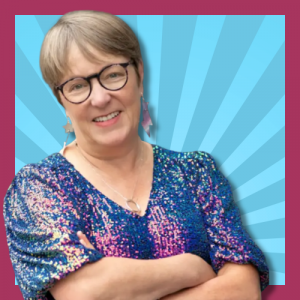
Sarah is a speaker, facilitator and coach with over 30 years of L&D experience, helping people show up online with the same confidence, warmth and presence they bring in person. She works with business owners, leaders and teams to build camera confidence and create more engaging online experiences, combining practical delivery techniques with behavioural insight and a healthy dose of reality about what online communication actually feels like for most people. Her take? Cameras don’t create connection. People do.
What you’ll get out of this session?
Research shows that when cameras are off, we’re far more likely to assume people are disengaged or not interested, even when that isn’t true at all. And when we push too hard for visibility, connection and engagement often get worse, not better. Sound familiar?
This session gets into the real reasons people avoid the camera, why online delivery can feel awkward and flat even for experienced facilitators and speakers who are brilliant in person, and how our assumptions about our audience affect the way we interact with them.
Sarah draws on her background in L&D and her work helping people build camera confidence to share practical ways to create warmer, more engaging online experiences, without forcing participation or demanding “cameras on” from people who’d rather not.
You’ll leave with a better understanding of what’s actually going on when online sessions fall flat, practical techniques to build more trust, connection and energy in your webinars, workshops and client sessions, and simple ways to improve your own on-camera presence so you show up with more confidence and warmth.
We asked Sarah: What’s one bit of advice you wish you’d had when you were starting out?
Look at the camera, not at the screen. It’s the simplest way to create a sense of eye contact with your audience.

Kara is a B2B marketing strategist, founder of The Marketing Spaces, and a Fellow of the Chartered Institute of Marketing (CIM). With over 20 years of running her own businesses, she helps business owners cut through the noise and build marketing that actually works. Her Growth Optics approach is rooted in a simple belief: finding your voice isn’t about being louder or more confident, it’s about being clear on what you stand for, who you help, and the value you bring.
What you’ll get out of this session?
There’s a lot of advice out there telling you to “find your voice.” Kara’s going to challenge that idea a bit. Because your voice isn’t something you go out and discover, it’s something that emerges when you get clear on what you actually offer, who you help, and why your work matters.
Drawing on her Growth Optics approach, Kara shares a simple, practical framework to help you sharpen your positioning and say the right things to the right people. When your thinking is clear, your marketing messages start to feel natural, and showing up (on LinkedIn, in conversations, in proposals) stops feeling like such a performance.
You’ll leave with a clearer sense of how to define and articulate your offer, practical prompts you can use straight away to improve how you talk about your work, and a fresh perspective on visibility: why showing up more isn’t the answer on its own, and why getting clear first makes everything you say land that bit better.
We asked Kara: What’s one bit of advice you wish you’d had when you were starting out?
Building your company around who you are is the key to success – I spent too long trying to be someone else!

Linnéa is an independent learning strategist and learning designer based in Sweden. Through her company, LinnéaLearning, she partners with organisations to solve real workplace problems through learning, performance support and better conditions for behaviour change, rather than defaulting to “we need a course.” She’s built much of her own professional visibility by sharing her thinking publicly over time, through her (Swedish) blog, YouTube channel, LinkedIn, podcasts, conference sessions and community work, well before she started her company in 2020.
What will you get out of Linnéa’s session?
Being visible as a freelancer can sound simple in theory. Post more. Say more. Show up more. But for a lot of independent practitioners, visibility also brings discomfort and self-doubt. It can feel like you’re expected to create a public persona and then keep performing it: the successful freelancer, the confident expert, the polished thought leader, or whatever version of “visible” you think people are after.
In this session, Linnéa explores how freelancers in L&D, coaching, facilitation and people development can become more visible without putting on a show. She looks at visibility as a way to build trust, share how you think, and make your value easier for others to understand, while still being properly true to yourself.
Drawing on her own experience of building visibility through blogging, YouTube, LinkedIn, podcasts, speaking and community work, she’ll share practical reflections on finding your voice, working with imposter feelings, and choosing forms of visibility that actually fit your strengths, energy and business goals.
You’ll leave with a broader view of what visibility can look like for independent practitioners. Rather than a set menu, think of it more like a buffet table: writing, speaking, video, podcasting, conversations, community contribution and thoughtful commenting can all be combined in different ways depending on who you are, what you enjoy, what you can sustain, and what kind of business you want to build.
You’ll also get a different way of thinking about imposter feelings (they don’t necessarily mean you’re doing visibility wrong, just that you’re stepping into being seen before it feels fully comfortable), and a reminder that a visibility strategy has to work when you’re busy, not just when your diary has gaps.
We asked Linnéa: What’s one bit of advice you wish you’d had when you were starting out?
I wish someone had told me that visibility does not have to be a performance of certainty. You can share questions, reflections, changed opinions and unfinished thinking, as well as answers and advice. Showing what you are exploring, what you are learning and how your thinking develops can build trust in a way that feels much more honest than pretending to have it all figured out.

Dr. Heidi Kirby is an L&D strategist, consultant and founder of Useful Stuff. With a PhD in instructional design and technology and a career that has taken her from college English classrooms to NASA to corporate L&D leadership, she specializes in helping organizations design learning that changes people, not just checks a box. She is the creator of FUSE: a Framework for Useful Learning Evaluation, which integrates evaluation into the design process from the start and includes measures leaders love. She has been published in TD Magazine and is one of the most recognized independent voices in the field with over 25,000 LinkedIn followers.
What will you get out of Heidi’s session?
This session tackles a tough conversation — what to do when your pitch or proposal gets declined. Rather than framing rejection as a setback to recover from, Heidi will show how it can be the prompt to build your own room instead of waiting for a seat at someone else’s table, drawing on her own experience launching a conference, creating a successful industry podcast and community, and publishing original research when the usual channels weren’t the right fit. Attendees will leave with practical ways to decide which content streams to build (writing, speaking, research, events) and how to sustain them, so their visibility stops depending on any single gatekeeper’s “yes.”
Attendees will walk away with a practical framework for turning rejection into their own growth engine, rather than a reason to become invisible. They’ll leave being able to
- diagnose why something was declined (fit, timing, gatekeeping, genuine mismatch) so they can stop internalizing rejection as a verdict of their expertise
- decide what content stream to build next based on their strengths and audience, rather than chasing the next fad
- apply tactics to create self-built platforms, diversifying their reach.
We asked Heidi: What’s one bit of advice you wish you’d had when you were starting out?
Everything is made up – the products we use, the stages we apply to speak on, and the organizations we admire. Someone just made it all up, which means you can too.
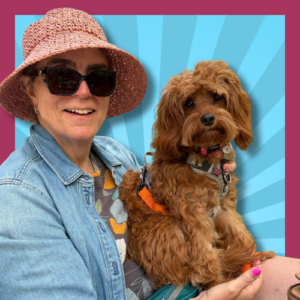
Joanne is a keynote speaker and inclusive culture expert who helps organisations create workplaces where people belong, leaders act inclusively, and technology supports rather than replaces humanity. Before moving into HR and people consulting, she spent more than two decades in IT and STEM, including roles in the Royal Air Force, UK cable television start-ups, Coutts, NM Schroder Financial Management and Royal & Sun Alliance. That technical background now informs her thinking on the human impact of AI in the workplace.
As founder and CEO of SEE Change Happen, she works with HR, talent and L&D teams to move beyond box-ticking and achieve meaningful, lasting change. A transgender woman, Joanne combines lived experience, professional expertise, storytelling and warmth in everything she does. She hosts the Inclusion Bites podcast, writes for HRZone, The HRD and TrainingZone, and brings her mantra, “Smile | Engage | Educate”, to every stage and every conversation.
What will you get out of Joanne’s session?
It’s no longer only about who you know. It’s about who knows you, including AI.
As people increasingly use AI tools to find speakers, consultants, coaches and subject-matter experts, being credible is no longer enough on its own. Your expertise also needs to be visible, connected and easy for both humans and AI systems to understand and trust.
In this session, Joanne explores how independent practitioners can build a coherent authority ecosystem around their work, showing how websites, articles, podcasts, books, social content and professional profiles can reinforce one another and help AI answer the question: “Who should I trust on this subject?”
You’ll leave with a clearer understanding of how clients and event organisers are beginning to discover experts through AI as well as traditional search, a practical approach to defining what you want to become known for, and ideas for connecting your content, profiles and platforms into one coherent whole. Plus a realistic sense of the balance between using AI to create opportunities and maintaining the human credibility needed to actually deliver when the door opens.
We asked Joanne: What’s one bit of advice you wish you’d had when you were starting out?
Stay curious, stay human, and don’t wait until you feel ready. The best learning happens when you listen deeply, take action, and stay open to being changed by the people you meet along the way.
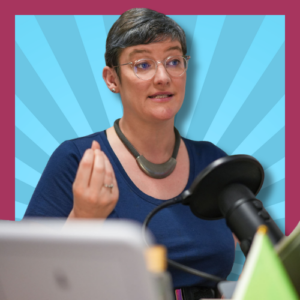
Hari is co-founder and lead storytelling coach at 13 Times, and the former UK Storytelling Coach for Accenture. With nearly a decade of experience developing storytelling training, she works with individuals and companies to sharpen their communication skills, become more confident presenters, and find their voice through the power of story.
What will you get out of Hari’s session?
Anxiety around public speaking is the most commonly diagnosed form of anxiety, and almost everyone has felt it at some point. Speaking at events, networking at conferences, putting yourself out there, these things are pretty much essential for freelance success. Which means avoiding them isn’t really an option, even when they make you want to hide behind the nearest pot plant.
As a freelancer, stage fright can also feel oddly isolating. There’s no team around you, no colleague to nudge you through the door. In this session, Hari offers practical tools and advice to help you calm your nerves, reframe your anxiety, and bring your best self to the stage, whether that’s a conference platform, a client presentation, or a networking room.
You’ll leave with practical techniques you can actually use, not just reassurance that it’ll be fine.
We asked Hari: What’s one bit of advice you wish you’d had when you were starting out?
Everyone gets stage fright sometimes. But it can be overcome.

Tracey is a communication expert and keynote speaker who, through The CommYOUnication Guru, works with business owners, leaders and teams to understand why people buy, why conversations go wrong, and how better communication changes everything. Blending human behaviour, interpersonal dynamics and years of real-world experience, she challenges assumptions, busts communication myths and leaves audiences seeing themselves and others differently. Expect plenty of laughs, a few lightbulb moments, and maybe an uncomfortable truth or two, all delivered with warmth, honesty and absolutely no fluff.
What will you get out of this session?
Communication is key to everything, from your written content, to what you say and how your body language and voice tone come across impacts on every interaction you will have. We’ve all been in situations where we’re talking to someone, they’re nodding and smiling, seemingly interested and then they disappear in to the ether never to be heard of again, leaving us scratching our heads wondering what happened.
Tracey will help you understand where the communication gaps actually appear, covering the three things that make the biggest difference to how you’re received: being clear, being memorable, and being congruent in your words, voice tone and body language. Because whether you’re writing a LinkedIn post, pitching to a client, or standing on a stage, all three are working together in every interaction you have, whether you’re aware of it or not.
We asked Tracey: What’s one bit of advice you wish you’d had when you were starting out?
Relationships are the key to any business success.

Sapna has spent 30 years building brands, 20 of them in corporate for the likes of Mercedes-Benz, L’Oréal and Sony Ericsson. For the last decade she’s brought that big-brand knowhow to founders and experts, helping them close the credibility gap so they can charge more and land bigger clients.
Writing her own book, ‘Let’s Get Visible!’, meant Sapna had to overcome her own fears of failure and success, especially once she won a Business Book Award – and it brought her more visibility than ever! She gets it – and now speaks on stages, podcasts and coaches ambitious founders to build their personal brand, with visibility at the heart of their business growth.
A recent client said, “Some people don’t just help you build a brand. They help you discover your voice. (Sapna has) a rare gift for seeing the best in people and helping them bring it to life. 🔥 ”
What will you get out of this session?
If you want to stand out in your industry and build your personal brand, one powerful way to build your authority is by writing a book. But that whole journey can be fraught with self-doubt, uncertainty and a boatload of impostor syndrome! Sapna Pieroux gives us her own very personal journey on this subject from jobbing freelancer to multi-award-winning Key Person of Influence, speaking on stages and podcasts – and it all changed after the release of her book in 2020.
Sapna will be going through:
- Understanding the mindset shift to go from invisible to visible
- Tips on writing the actual book
- And how to go about promoting it for maximum impact!
We asked Sapna: What’s one bit of advice you wish you’d had when you were starting out?
Visibility is crucial to building your personal and business brand – writing a book is a really great way to cement this

Paul is a Growth Partner for founders of profitable B2B service businesses who’ve hit a growth ceiling and lean too heavily on referrals. Having built, scaled and exited two businesses, he works peer-to-peer with owners to engineer predictable growth, a bit like having a co-founder without the equity split.
His Growth Gears framework moves businesses through eight sequential stages across Position, Product and Pipeline, turning inconsistent, referral-led growth into something repeatable. Paul has worked with major brands including Vodafone, Salesforce and HSBC, and is an angel investor with South East Angels. Based in Hove, he works with founders across the UK and beyond, and his approach is bold, honest and results-focused: no sugar-coating, no generic advice, just clear moves that make the biggest difference to your bottom line.
The one question he keeps coming back to: what is your best next move?
What will you get out of Paul’s session?
Putting your voice out there, speaking, raising your profile, building your reputation, it’s powerful stuff. But it’s only one part of a bigger system. In this session, Paul walks you through the Growth Gears, his eight-part framework for growing a service business. Not every gear is about visibility, and he’s not going to pretend otherwise. What matters is seeing where your speaking and profile-raising actually sit within the system, and why the gears around them need to be working too. Get seen without the right positioning, offer or follow-up in place, and all that visibility just leaks away.
There’ll be a live exercise so you can spot which of your own gears are strong and which ones are quietly holding you back.
You’ll leave with a clear map of the eight Growth Gears, an understanding of where your visibility and speaking efforts actually fit within them, and a sense of which gears are already working for you versus the weak one that’s stopping you cashing in on the profile you’re building. Most usefully, you’ll walk away with your single best next move: the one change that turns being seen into actually winning the work.
We asked Paul: What’s one bit of advice you wish you’d had when you were starting out?
Nobody looks at your posts as much as you do. If you aren’t bored of the sound of your own voice, you probably aren’t posting enough. And don’t take it all too seriously, have a little fun with it.
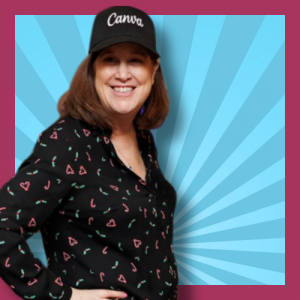
Thea is one of only 45 Canva Verified Experts on the planet, turning design dread into “I can’t believe I made this!” moments. With nearly 15 years of training experience, she brings energy, humour, and no-nonsense tips to workshops, webinars, and 1:1s worldwide.
I’m also the founder of Totally Content, a hub for creative content, publishing, and print-on-demand. My passions include retro-tech, music, and helping others explore their creative potential.
We asked Thea: What’s one bit of advice you wish you’d had when you were starting out?
When I first started training, I made the rookie mistake of trying to copy my mentor, Gary. It felt all wrong, like wearing shoes two sizes too small – uncomfortable and not remotely me. The best advice I ever got? Be yourself and find your own style. The second I did, everything clicked, and training became fun, natural, and mine.
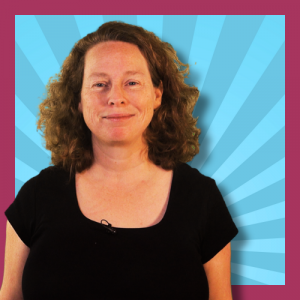
Jill is a former BBC journalist turned training and education filmmaker, on a mission to make learning and business media genuinely better. She fell into L&D somewhat by accident, when it became clear that much of the video and audio people were expected to learn from was, frankly, not up to scratch. With 30 years in broadcasting and higher education, she now works with business owners and learning professionals to help them produce content that actually does what it’s supposed to do.
What you’ll get out of this session?
A showreel is one of the best ways to show potential clients what you’re made of. When someone can see and hear you on camera, watch you at work, or get a feel for how you come across in an interview clip, they can much more quickly work out whether you’re the right fit for them.
But putting together something that feels professional, personal and genuinely compelling (without tipping over into cringe) takes a bit of thought and planning. In this hands-on Skills Lab, Jill walks you through exactly how to do it.
You’ll cover good practice for filming and presenting to camera, how to illustrate your message with images, gathering useable interview clips, making the best use of text and graphics, and how to pull it all together into something you’re actually proud to share.
We asked Jill: What’s one bit of advice you wish you’d had when you were starting out?
Even if it doesn’t seem like you’re getting anywhere, the fact you’re still plugging away means you are indeed getting there.

Jo is a speaker, facilitator and learning consultant with nearly 30 years of experience, and also part-time Editor of Training Journal. Jo has specialised in virtual classrooms, webinars and hybrid events since 2013 and has a passion for supporting people to embrace the benefits of the digital learning and L&D industry professional development. Jo’s background includes further and higher education, the charity sector, and small and large organisations, including Turner Broadcasting/CNN News and Bupa International.
Find out more about Jo and her work on her website www.lightbulbmoment.info or the L&D online magazine www.TrainingJournal.com
What you’ll get out of this session?
Ever sat down to write something and immediately talked yourself out of it? Convinced yourself you don’t really have anything worth saying, or that someone else has already said it better?
In this practical Skills Lab, Jo takes you through the process of finding a real article idea, shaping it into a simple outline, and actually starting to write. Through examples, prompts and short activities, you’ll make proper progress in the session itself, not just leave with a vague intention to write something later.
By the end, you’ll have identified an article idea and the central point you want to make, shaped a simple outline, started at least one paragraph, and had your idea validated by someone who knows a thing or two about what makes a good piece of writing. Whether you want to write for LinkedIn, your own blog, a newsletter or Training Journal, this is a great place to build your confidence and get started.
We asked Jo: What’s one bit of advice you wish you’d had when you were starting out?
Get a network of trusted friendly people around you, it makes a huge difference day to day!

Matthew Matheson is The Speaking Coach and host of The Public Speaking Podcast. He’s on a mission to help leaders, teams and individuals find their power in the spaces that matter, whether that’s the boardroom, the big stage or online.
Over the past 15 years, he’s spoken at and coached for major conferences including BrightonSEO and CamundaCon, contributed to media stories, interviews and podcasts, and built a reputation for championing authentic, powerful, human communication.
In his own words “I know what it’s like to want to speak powerfully but freeze, stumble or spend hours worrying if you’ll ‘get it wrong’. I’ve been there. And I’ve done the work to come out the other side.”
What you’ll get out of this session?
In this Skills Lab, Matthew shares his Cards to Clarity and Blue-print process, giving you the tools to prepare for any communication situation, big or small. You’ll leave with practical tools to prepare a message that actually matters, a much clearer sense of why preparation (and the lack of it) makes such a difference, and a straightforward approach to showing up with confidence when speaking under pressure.
We asked Matthew: What’s one bit of advice you wish you’d had when you were starting out?
Be bold, feel into the fear, and know that confidence is something that can be learned.
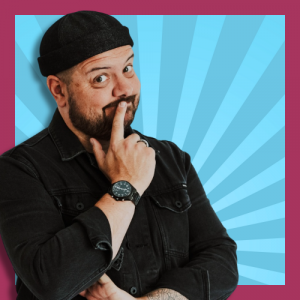
Mark is a coach, consultant and content creator who has spent the last two decades helping leaders and teams improve how they work together. Drawing on the principles of positive psychology, he creates safe, constructive spaces that enable meaningful conversations with long-lasting impact.
With experience across 20+ countries and sectors, he specialises in team leadership, psychometrics and navigating complex interpersonal dynamics. A regular contributor to the L&D and HR space, he has presented at BPS, CIPD and DISRUPTHR, written for Training Zone, HR Zone and ACCA Magazine, and is a former co-host of the Free Spirits of L&D Podcast. Away from his consultancy work, Mark runs a YouTube channel helping people make smarter tech choices and get more out of the tools they use every day.
What you’ll get out of this session?
YouTube is one of the most powerful platforms available to freelancers who want to build visibility and share their expertise, but knowing where to start can feel overwhelming. In this practical Skills Lab, Mark cuts through the noise and gives you the essentials to set yourself up for success, without wasting time or money on things you don’t need yet.
You’ll leave with a clear understanding of what it actually takes to get started on YouTube, the basics you need to get right from the off, and the confidence to take your first (or next) step.
We asked Mark: What’s one bit of advice you wish you’d had when you were starting out?
Practice saying no as often as you possibly can.
Meet the moderators
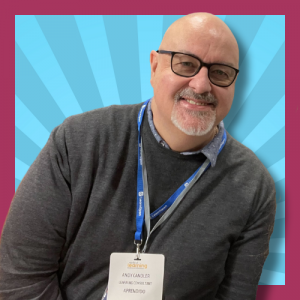
Andy is your plain speaking Learning Consultant from Aprendido Limited… Oh goodie, another L&D Consultant. Just what the world needs!
But here’s the thing: many businesses are still paralysed by the perceived cost and complexity of digital learning.
That’s where Andy comes in.
He helps organisations design and deliver digital learning that works – clearly, affordably, and without the nonsense. No jargon. No inflated tech. Just straight-talking advice and hands-on delivery.
Andy combines logic with empathy to cut through the fluff and focus on what your business really needs. With 35+ years’ experience and a background in digital, he guides clients from discovery to implementation – building bridges between teams and making change happen.
Andy communicates in plain English, stays hands-on, and know when to bring in the right people. He don’t pretend to have all the answers – but he knows how to find them.
We asked Andy: What’s one bit of advice you wish you’d had when you were starting out?
When you are a freelancer, every stranger is a new opportunity. Forget about competitors. Everyone in business just wants to be a success and to help others achieve the same.

Craig is a freelance digital learning designer and the founder of Arck Learning, working as a boutique partner to create story-led, visually distinctive eLearning. His work focuses on bridging style and substance, combining strong visual design with thoughtful structure to create modern, mobile-ready learning that works in real environments.
Craig works closely with clients from first conversation through to delivery, valuing clarity, collaboration and calm project flow. He’s particularly interested in how learning projects are shaped by process, decision-making and relationships, not just content. His experience spans onboarding, capability development and large-scale learning journeys across a range of sectors.
We asked Craig: What’s one bit of advice you wish you’d had when you were starting out?
Build trust through how you work, not just what you deliver.

Viv is a Digital learning consultant with over 25 years experience helping organisations in professional services and other regulated sectors design effective learning. Business partner, learning experience designer, coach and Free Spirit Wizard.
Viv has also been a Learning Techologies Awards judge for several years and is an absolute stickler for impactful learning and a well-brewed cuppa.
We asked Viv: What’s one bit of advice you wish you’d had when you were starting out?
Although you’re doing it on your own, ask for help and get mentors along the way